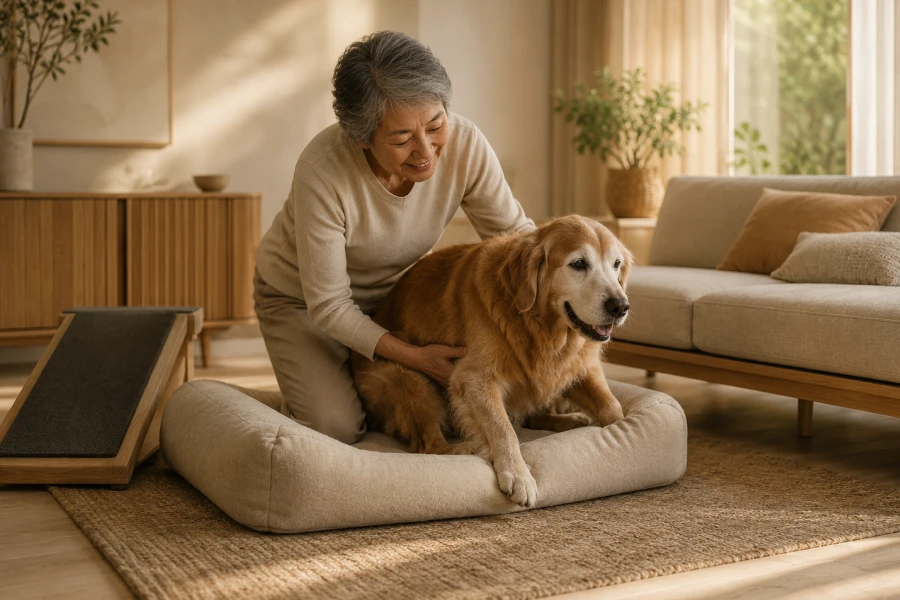
Aging can make a familiar house feel unexpectedly difficult for a dog. Steps become steeper, hard floors feel colder, and favorite corners may become harder to reach. Home comfort for senior dogs helps preserve confidence through those changes. It is not about treating an older dog as fragile. It is about making everyday choices gentler and more practical. A few thoughtful adjustments can reduce strain without changing your entire home. Your dog can remain part of family life while moving at their own pace. The most helpful changes often support rest, traction, warmth, and easy access. They also make daily care less stressful for the people who love them. Comfort becomes a steady form of respect.
Look at your home from the perspective of a dog who moves more slowly. Which areas require jumping, twisting, or navigating tight spaces? Which routes become slippery after cleaning or bad weather? Start with the places your dog uses several times each day. Add traction where paws tend to slide. Place water where it can be reached without crossing a busy room. Use thoughtful pet home design to reduce unnecessary effort. A small ramp or low step can protect confidence. So can moving favorite items closer together. Easier choices help your dog stay independent for longer.
Senior dogs often know every corner of their home. That familiarity can make them reluctant to avoid difficult areas. A darker hallway may feel more confusing at night. A cool tile floor may discourage them from resting nearby. A bed that once felt soft may no longer provide enough support. Watch for subtle changes, such as hesitation before standing. Notice whether your dog circles longer before lying down. These moments are useful information, not reasons to panic. They help you identify the next practical improvement. A familiar room can remain comforting when its details continue supporting your dog.
Older dogs still want connection, even when they need more sleep. Place supportive beds near the people your dog trusts. Choose a spot with fewer sudden movements and less foot traffic. Avoid treating rest as a reason to separate your dog from family life. Good dog sleep space setup keeps comfort and belonging together. Give your dog more than one resting option if possible. One bed may work well during daytime activity. Another may feel better for nighttime quiet. Choice helps your dog follow their energy instead of adapting to everyone else’s schedule.
Small environmental details become more important as dogs age. Gentle lighting can make evening movement easier to manage. Stable temperatures can protect older joints from unnecessary discomfort. Soft, washable layers add warmth without making a bed difficult to enter. Keep blankets from bunching under paws. Avoid placing beds directly in drafts or intense sun. Notice whether your dog seeks a certain temperature at different times. Those preferences may change with seasons or health needs. Texture also matters beneath their feet. A supportive environment should feel steady, warm, and easy to navigate.
Some days will be easier than others for an older dog. Avoid judging progress by one restless night or slow morning. Instead, build quiet support into regular care. Keep meals, medication, walks, and sleep times as consistent as possible. Shorter outings may feel better than one long excursion. Let your dog choose a slower pace when their body asks for it. Make grooming sessions gentler and more frequent if needed. Keep household changes gradual whenever possible. Consistency does not eliminate every challenge. It simply gives your dog a reliable base during change.
Senior care becomes easier when everyone follows the same basic rhythm. Decide where leashes, towels, supplements, and comfort items belong. Keep water bowls clean and easy to reach. Use adaptable dog care routines rather than complicated rules that collapse on busy days. Tell family members which areas need clear pathways. Let visitors know how to approach your dog gently. Revisit the routine after veterinary changes or seasonal shifts. A consistent system protects your dog from unnecessary surprises. It also helps you notice changes sooner. That awareness is one of the most valuable forms of care.
It is easy to add too many changes at once when you want to help. Begin with the area creating the most difficulty. Improve one route, one bed, or one daily transition. Watch how your dog responds before changing something else. Build peaceful home habits for pets through steady repetition instead of big gestures. Your dog does not need a completely different life. They need their familiar life to feel more manageable. That distinction keeps your decisions practical. It also protects the sense of security your dog already has. Comfort grows through attention, not excess.


Leave a comment