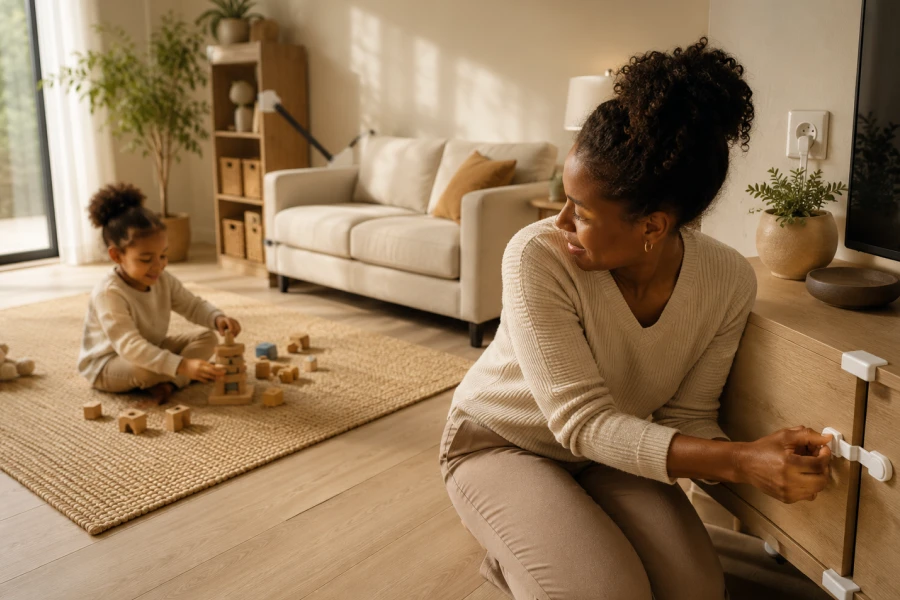
Childproofing does not begin with buying every safety product on the shelf. It begins when you see ordinary rooms from a child’s lower perspective. Childproofing a home room by room helps reveal risks hidden in familiar spaces. A loose cord, open cabinet, or unstable stool can look harmless to adults. For a curious child, each one may invite exploration. The goal is not to create fear around every object. It is to make daily movement safer before a small risk becomes urgent. A thoughtful approach gives children room to learn within sensible boundaries. It also helps parents feel less overwhelmed by everything that could go wrong. One room at a time is often the clearest place to begin.
Get down to your child’s height before deciding what needs attention. The view changes immediately from the floor. You will notice outlets, cords, low shelves, furniture corners, and open storage. Start by identifying objects your child can grab or pull. Focus on high-use rooms before moving to less common spaces. Room by room childproofing makes the task feel smaller and more manageable. You do not need to solve every issue in one afternoon. Clear one surface, secure one cabinet, and improve one pathway. Those practical wins build momentum. They also create a safer environment without making the home feel clinical.
Many risks become visible only when routines speed up. Think about what happens during meals, laundry, bedtime, and rushed mornings. A chair that feels harmless may become a climbing tool. A handbag on the floor may hold medicine, coins, or sharp objects. A half-open door can become an invitation to explore. Start noticing what changes when adults are distracted. This is where baby proofing essentials become truly useful. The most effective protections fit into normal life. They do not require constant reminders to work. Instead, they reduce risk before your attention is pulled elsewhere. That makes safety more realistic for busy families.
Children explore what is within reach, not what adults intend them to use. That makes access more important than labels or verbal warnings. Move unsafe items upward, inward, or behind secure barriers. Keep low drawers for safe objects whenever possible. Give children appropriate things to touch, open, and carry. A child-safe environment should not feel like a series of no messages. It should offer clear alternatives. Use home risk assessment for children to identify which items need a new location. Recheck these choices as your child becomes taller and more mobile. Reach changes quickly during early childhood. Your home should be ready to change with it.
Even attentive parents need moments to cook, answer a call, or use the bathroom. A safer room gives you more confidence during those brief pauses. It cannot replace supervision, but it can reduce avoidable hazards. Keep pathways clear so children can move without tripping. Anchor furniture that could tip if pulled. Store sharp tools and cleaning products behind secure doors. Add simple barriers near stairs, exterior doors, and high-risk zones. Build child-safe kitchen planning around actual meal routines, not idealized ones. When a system is easy to follow, it is more likely to last. That consistency matters during the busiest parts of the day.
Childproofing is not a one-time project with a final finish line. Children gain new skills faster than many homes can anticipate. A baby who only rolled last month may suddenly pull up on furniture. A toddler who ignored a drawer may become fascinated by latches. Recheck rooms after developmental changes, travel, guests, or furniture moves. Notice what your child watches, reaches for, or tries to copy. These behaviors are useful clues about the next safety update. Regular reassessment prevents you from relying on outdated assumptions. A familiar room can change quickly through a child’s eyes. Staying curious helps you stay prepared.
Safety systems should help family life flow more easily, not make every room feel restricted. Choose solutions that fit your home’s rhythm and style. Use baskets, high storage, and simple latches where they make sense. Keep daily items accessible for adults without making them available to children. Involve other caregivers in the routines you create. Explain where important items belong and why the system matters. Make room for play without letting clutter spread into risky areas. A good setup supports connection, movement, and learning. It also gives adults fewer things to manage during already busy days. Practical safety can still feel warm and welcoming.
The best safety habits evolve alongside your child. What protects a crawling baby may not work for an adventurous preschooler. Review your systems every few months instead of waiting for a scare. Keep a short list of updates you notice during the week. Then handle them when you have time and supplies available. Ask what has become easier for your child to reach. Consider what new routines might introduce fresh risks. Small adjustments often prevent bigger changes later. A home can become safer without becoming less comfortable. That steady attention creates a safer place for children to grow.



Leave a comment