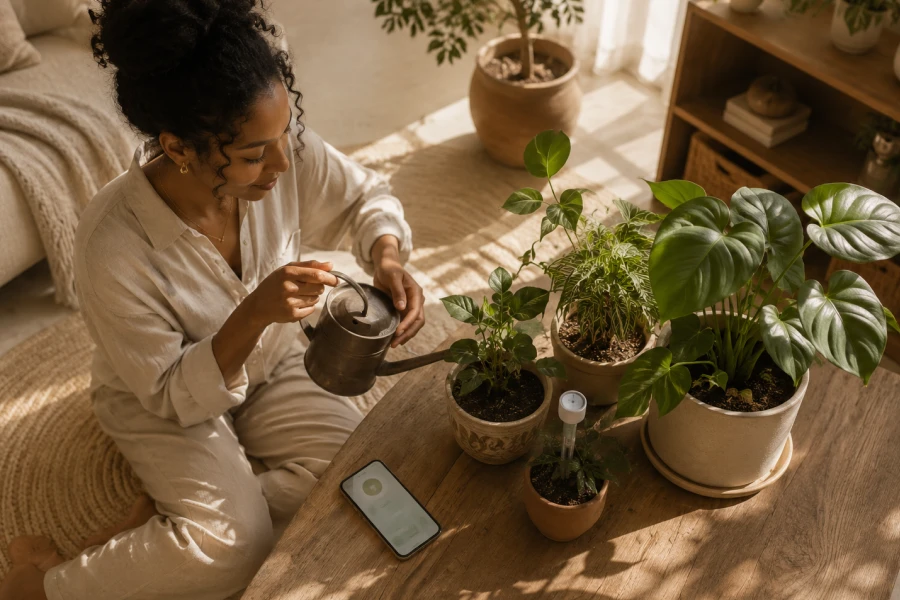
Many plant problems begin with a simple question asked too late: does this plant actually need water today? A smart watering routine for houseplants replaces automatic habits with better observation. It helps you notice how soil, light, room temperature, and seasonal changes affect each plant. Two plants in the same room may need completely different schedules. One may dry quickly in bright light, while another holds moisture near a cooler window. A fixed calendar cannot always account for those differences. A thoughtful routine teaches you to look for patterns instead. That lowers the chance of watering from habit alone. It also helps plants receive care that matches their real environment. Better timing begins with better information.
Start by learning what healthy soil and foliage look like for each plant. Feel the top layer of soil before reaching for the watering can. Notice whether the pot feels lighter than usual. Check leaves for firmness, color, and direction. Look for changes that repeat rather than reacting to one imperfect leaf. Use smart watering reminders as prompts to check conditions, not instructions to water automatically. A reminder can prevent neglect without creating overwatering. Your plant still has the final say through its current state. This approach keeps care responsive. It also helps you build confidence with each successful adjustment.
A calendar is convenient, but plants do not follow identical weekly schedules. Cloudy weather can slow drying. Heating systems can dry soil faster. A recent repot may change drainage and root access. Larger plants may use more water during active growth. Smaller pots can dry quickly even when nearby plants remain damp. When you water only because a date arrives, you miss these important differences. Instead, use timing as a starting point for observation. Keep a flexible record of when each plant usually needs attention. Over time, you will recognize a rhythm that makes more sense than a fixed rule.
Moisture matters, but it is only one part of a healthy routine. Light exposure affects how quickly a plant uses water. Pot size, drainage, soil mix, and root health also matter. A thirsty plant near a bright window may need different care than one in a shaded corner. Build an indoor plant care routine that considers the full environment. Rotate plants only when they need more balanced light. Avoid moving them constantly without a clear reason. Think about changes in the room before changing the plant. Good care looks at the whole system, not just one symptom.
Confidence grows when you can explain why you are watering or waiting. Begin by checking the same signs each time. Look at soil, leaves, pot weight, and recent weather. Write down unusual changes when they happen. This makes it easier to compare one week with the next. You may notice that a certain plant needs water less often than you expected. Another may need a more breathable soil mix rather than more frequent watering. These insights make care feel less mysterious. They also help you avoid changing several things at once. A clear routine turns observation into practical knowledge.
Every room creates a different plant-care environment. Bathrooms may hold more humidity but less direct light. Kitchens can offer warmth, steam, and changing temperatures. Bedrooms may stay cooler overnight. Windowsills can be bright but drafty. Pay attention to where your plants live instead of treating them as one collection. Group plants with similar needs when that makes care easier. Keep delicate varieties away from strong vents or sudden temperature changes. A stable location often supports a more stable watering pattern. Room conditions are part of the care plan, not background details.
Plants often change their water needs when daylight shifts. Growth may slow during darker months and increase in brighter ones. Indoor heating can change how quickly soil dries. Outdoor humidity may affect plants near open windows. Use seasonal plant care as a reason to reassess your usual routine. Check whether your reminders still fit current conditions. Reduce watering only when the plant and soil suggest it. Increase attention during active growth rather than watering on impulse. Seasonal awareness keeps your routine useful all year. It also helps you avoid treating normal change as failure.
Busy weeks are when simple routines matter most. Keep your watering tools in one easy-to-reach place. Set a regular time to walk through your plants and look closely. Group checking tasks so they take less mental energy. Use reminders to prevent forgetting, then let observation guide your action. Ask someone to check especially sensitive plants if you travel. Avoid soaking every plant before leaving without considering its needs. A steady routine should make plant care feel manageable, not demanding. The goal is not constant perfection. It is dependable attention that your plants can benefit from over time.




Leave a comment