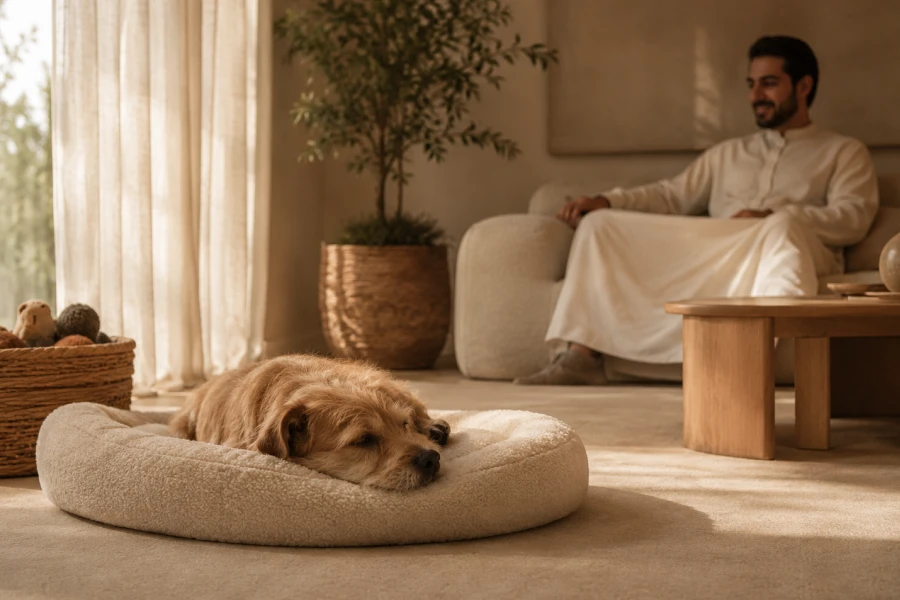
Training matters, but your home influences behavior long before a cue is given. A calming home environment for dogs gives them fewer reasons to stay on alert. It creates patterns they can understand without constant correction. Familiar sounds, clear routes, and dependable rest spaces all reduce uncertainty. This approach does not ask a dog to be quiet all day. It gives them room to recover after normal excitement. The result is often a more settled companion and a less stressful household. You do not need a perfectly silent home to create that feeling. You need thoughtful rhythms that match your dog’s sensitivity. Once the environment feels easier, learning often becomes easier too.
Dogs notice patterns with remarkable accuracy. They learn the sound of your keys, the time of meals, and the route to the door. Predictable routines help them anticipate what happens next. That does not mean every day must follow a rigid schedule. It means the most important moments should feel familiar. A steady puppy home routine can help young dogs settle into a new household more smoothly. Use the same location for meals whenever possible. Build short pauses into transitions like coming home or greeting guests. Let your dog decompress after active outings. Repetition turns ordinary care into emotional reassurance.
Noise becomes stressful when a dog cannot escape it. Televisions, delivery sounds, conversation, and kitchen activity may seem normal to people. For a sensitive dog, those sounds can accumulate throughout the day. Notice whether your dog leaves the room during certain routines. Give them a quieter option instead of assuming they will adjust. Soft rugs, closed doors, and lower-volume entertainment can help. So can moving a bed away from a busy hallway. Everyday dog comfort often depends on reducing repeated small disruptions. Your dog does not need constant stimulation to feel included. They need a home where relaxation is genuinely possible.
Boundaries can feel caring when they make expectations easier to understand. A baby gate may give your dog a quiet break from a crowded room. A closed office door can prevent repeated interruptions during work calls. A designated bed can offer a place to settle while dinner is prepared. These choices are not punishments when introduced thoughtfully. They help your dog understand where they can feel secure. Use calm body language and consistent routines around each boundary. Avoid calling your dog away from their resting place unless necessary. Over time, the space becomes a positive option. That clarity reduces conflict for everyone in the home.
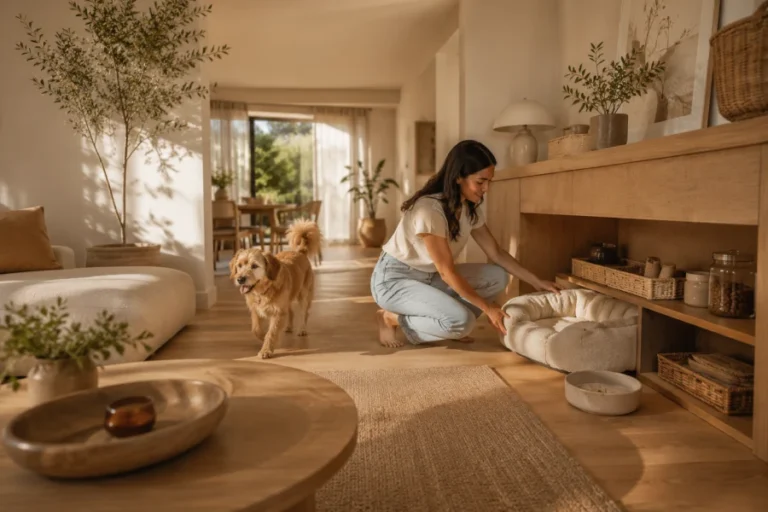
Dogs need recovery after walks, visitors, grooming, travel, and play. The best reset space is easy to reach and free from surprises. Keep water nearby, but avoid placing it in a crowded passageway. Offer a familiar blanket or bed that carries a comfortable scent. Reduce activity for a few minutes after high-energy moments. This type of dog anxiety support at home can prevent stimulation from building too high. It also teaches your dog that excitement has a gentle ending. Recovery does not need to be dramatic. Often, a calm routine and a quiet corner are enough. Those repeated pauses add up across the week.
Simple rituals can make difficult moments less charged. Try a brief settle period before visitors arrive. Put a chew or comfort item in a familiar spot before answering the door. Create a post-walk routine that includes water, a quick wipe, and rest. Use the same phrase before bedtime so your dog recognizes the transition. Keep departure routines low-key instead of emotional. Your dog watches your energy as much as your actions. When people move calmly, dogs often respond with less urgency. Repeated rituals reduce the need for last-minute problem solving. They also create a home that feels easier to understand.
A peaceful home does not need to look empty or overly controlled. It can hold family dinners, playful children, weekend guests, and busy mornings. The difference lies in whether your dog has choices within that activity. Give them access to a low-traffic room when the house becomes loud. Keep familiar objects nearby during changes. Use indoor enrichment for dogs when weather or schedules limit outdoor activity. Scatter feeding, scent games, and short training sessions can direct energy without overwhelming them. A balanced environment includes play and rest. It lets your dog participate without requiring constant engagement. That is the foundation of sustainable calm.
What worked last year may not work after a move, new job, or health change. Reassess your dog’s behavior before assuming they are being difficult. Look for patterns around time, place, or household activity. You may need to move a bed, simplify an entryway, or create more quiet time. Introduce changes gradually so your dog can understand them. Keep familiar routines in place while testing new arrangements. Small adjustments usually work better than total resets. Your dog is showing you what feels manageable. Listen to those signals before adding more rules. A calmer home begins with that kind of attention.


Leave a comment